Friday, January 27, 2017

Recommended books on teaching.............

           Recommended books on teaching


For those of you interested in the teaching and learning processes, I’d recommend checking and flicking through some of the following books which describe what happens when teachers have ownership of what and how they teach……….something that has disappeared as teachers are more and more now told HOW and WHAT to teach by those who have little or no experience of what is required to create a community of enthusiastic learners….


Here’s my  list, in no particular order:


  • The Integrated Day……… Norman Precious and Mary Brown
  • The Informed Vision…….. David Hawkins
  • What to look for in a classroom…………...Alfie Kohn
  • The schools our children deserve………...Alfie Kohn
  • In the Early World………...Elwyn Richardson
  • Open Education and the American school…………..Roland Barth
  • Schools where children learn………..Roland Barth
  • Improving schools from within…….Roland Barth
  • How children fail…………..John Holt
  • How children learn………...John Holt
  • Few adults crawl. …………Tony Kallet
  • Crisis in the classroom……..Charles Silberman
  • The ESS reader
  • Curriculum Integration……..James Beane
  • Starting From Scratch…...Steven Levy
  • What Every Middle School Teacher Should Know… David Brown and Trudy Knowles
  • Science Workshop………...Wendy Saul
  • Curious Minds………………..John Breckman
  • The Unschooled Mind……….Howard Gardner
  • Sharing nature with children…….Joseph Cornell
  • Last Child in the Woods………….Richard Louv

Collecting MOONDUST! One of my favorite science/community-building activities.........

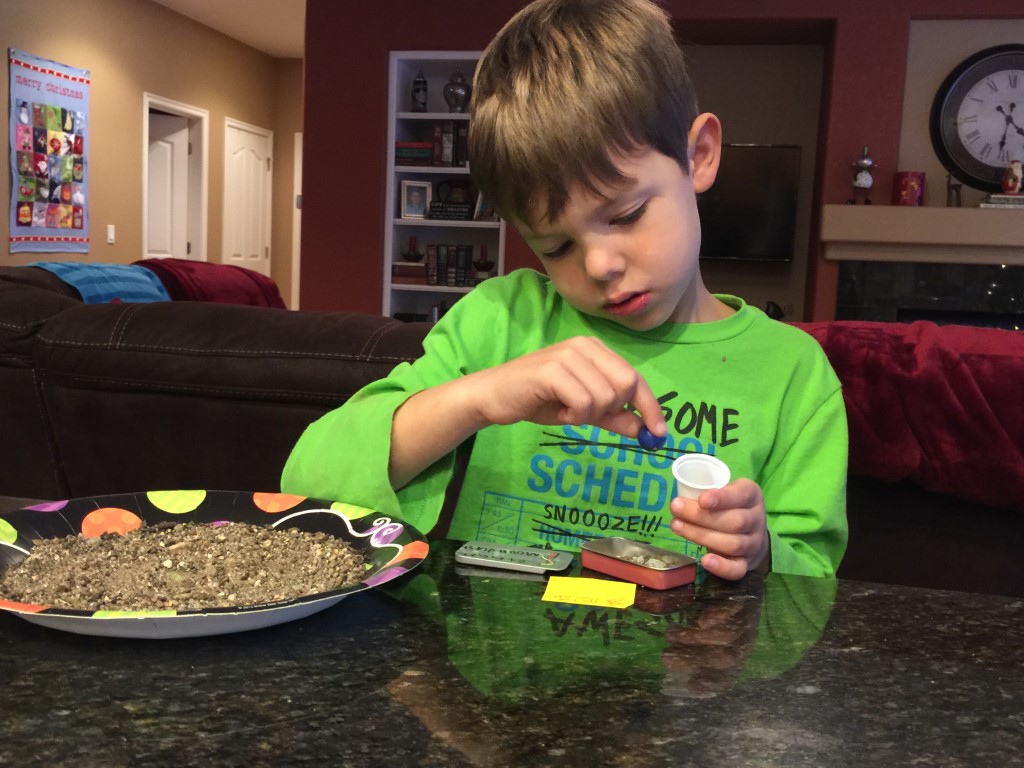
ImageCollecting moondust!!


A couple of years ago, when listening to Morning Edition on NPR, my attention was caught when an interview focused on the previous night’s meteor shower over Colorado.

Apparently, after such a shower, one can find magnetic meteorite dust by sweeping the ground with a magnet. That gave me an idea…………..


A meteor shower, incidentally, is the result of an interaction between Earth and streams of debris from a comet. Each time a comet swings by the sun in its orbit, some of its ice vaporizes and a certain amount of meteoroids (iron based, so magnetic) are shed. The meteoroids  spread out along the entire orbit of the comet to form a meteoroid stream also known as a dust trail, and eventually fall to the earth below, waiting to be collected by young scientists.


So, soil collected on a walk might contain some iron particles which I call ‘moondust’ and can be discovered by using a magnet.


What you need:  

  • A soil sample, ideally from the banks of a nearby stream
  • A magnet
  • A small container to hold the magnet
  • A tin
  • A magnifying glass


What you do:


Spread out the soil on a small tray. Then, slowly move the magnet in the container over the soil. If there’s any meteoroids in the earth, they will stick to the bottom of the container.

Hold the container over the empty tin and remove the magnet.

The moon dust will fall inside the bottom of the tin.

******* Don’t forget to label the tin and date it - and, hey, you have a Pocket Museum filled with MOONDUST!!

Capture those MOMENTS!!

Showing my wishing rock at a recent workshop....
THOSE
MAGICAL  CLASSROOM MOMENTS!
 Why don’t you  CAPTURE them!!
And save them – forever!


Hey, teachers, you can, and probably do, of course, use your smartphone as well as your camera to capture those special classroom teaching and learning moments……… videoing, photographing, recording the action.


If you enjoy catching those moments that make your teaching so rewarding and worthwhile, you might try this idea I came up with many years ago.


From my teaching journal........

After a wonderful but windy afternoon nature walk around the woodland near school, my class sat around me on the classroom floor and we  began to talk about what they’d seen.
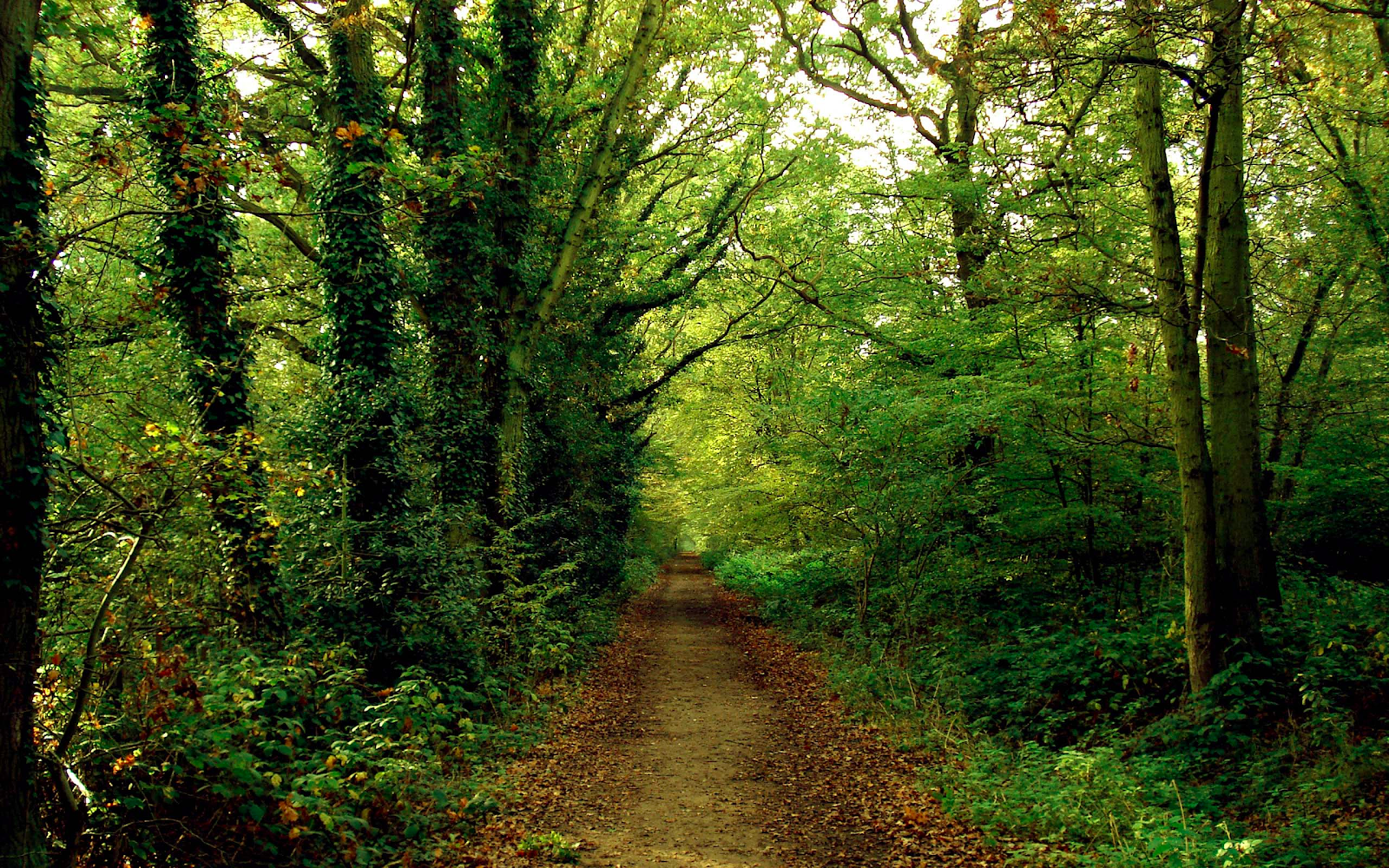
Dianne said how much she enjoyed the walk in the long grass around the trees.
“Everything was beautiful, Mr. Paull……………. Everything smelled dead good. Did you hear the wind, though? It was making a howling noise and it made the leaves on the trees shake.”

Then she added, wistfully, “Pity we can’t bring back the smells and the sounds of nature. How could we do that, Mr. Paull?”


That made me think. And think. Mmmmmmmmm…………….


Then, that evening,  I had an idea. An empty bottle isn’t really empty, of course. It holds air. So, if you half fill, say, a small plastic bottle with water and then turn the bottle upside down, the water rushes out, pushing the air in front of it. For a split second, there’s nothing in the bottle. As we know, nature abhors a vacuum, so the air rushes in and fills the bottle.


The air carries everything ……….doesn’t it?


The next time we went for a nature walk, I took a bottle half filled with water. When we reached the tall grass and trees, I turned the bottle upside down and let the water gush out. As soon as the last drop ran out of the bottle, air rushed in, filling the vacuum.
IMG_1470.JPG

I immediately pushed in the cork. “Look,” I said, “we have captured the sounds and the smells of nature………forever.”  

Dianne was particularly excited when I stuck a label on the bottle and wrote the date on it:
June 8 th. 1966.
This bottle holds the smells and sounds of the flowers and the trees around our school.

And that started something.


Every time things were really humming in the classroom, I would stand in the middle of the room holding a small dish and a bottle half filled with water. Then, with great ceremony, I held the bottle over the dish and emptied out the water. Within a second, I filled a small bottle with all of the energy, sound, wit and wisdom of my children, and screwed on the top. Quickly I labeled it, and displayed it on a shelf.


My students loved the process and would often tell me, “Hey, Mr. Paull, you just HAVE to capture what’s going on on my table!!”


I used them at parent conferences, showing parents the bottles, then describing that each one was filled with a magical classroom moment of excitement, interaction, and learning.


Why don’t you try it – go on, capture one of those special ‘I’m a scientist’ moments today in a bottle!!
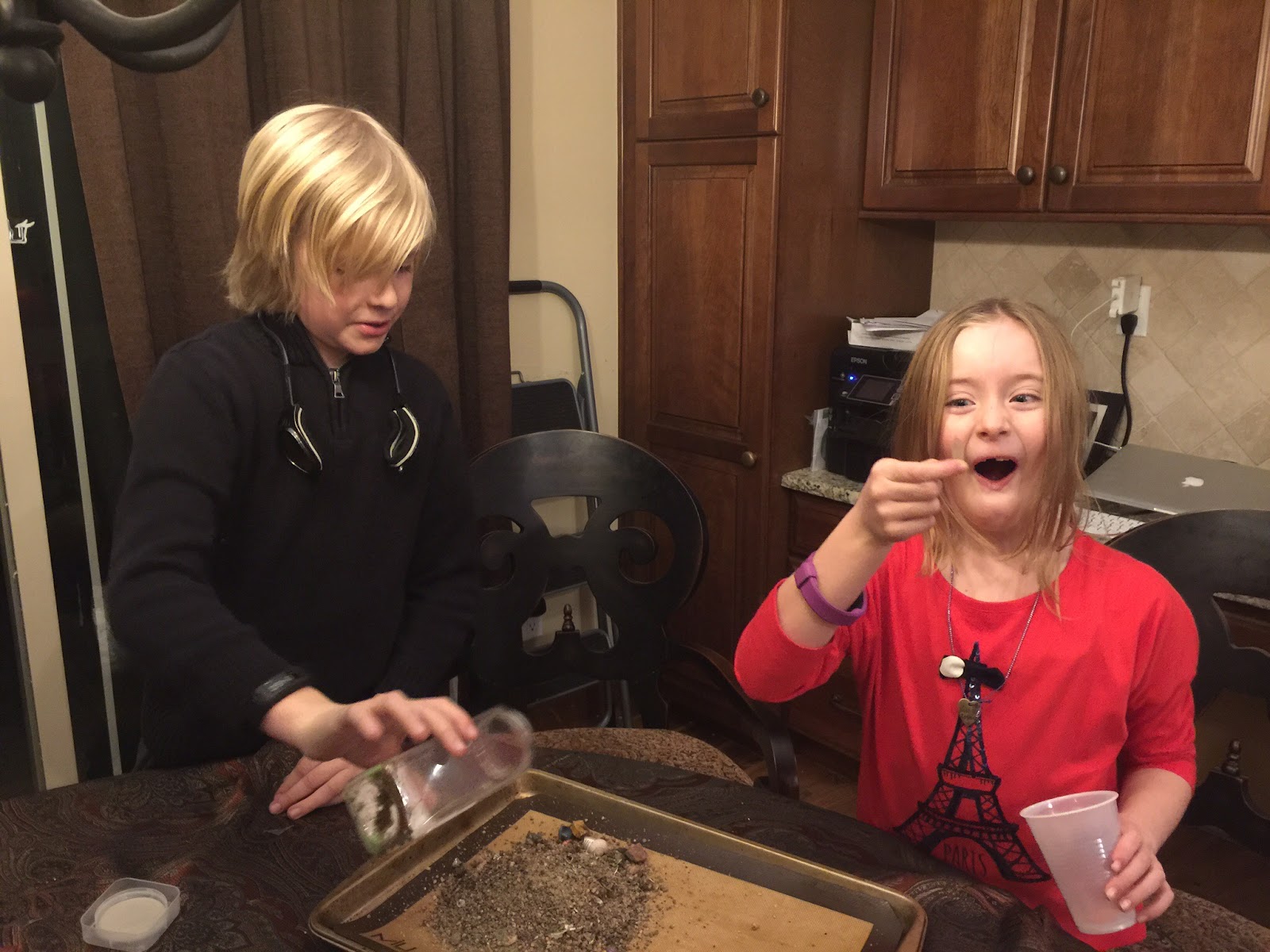

IMG_0419.JPGHOW? It’s easy.


What do you need? Just a small bottle and plenty of imagination!!


What do you do? At a critical ‘Oooh, aaah’ classroom moment, take the top off a tiny bottle. Blow across the top.

The fast-moving air sucks out the air inside the bottle. When you stop blowing, the air, and the atmosphere of excited learning, rushes in and fills up the space.


Write the date and place on a small label and stick it on the bottle.


Think about what you’ve done!

You have captured the time - and the magic classroom moment, the joy of your students……forever!  :)
                                                                             
P.S.        Students particularly enjoy this activity, and i encourage them to do the same…..bring in a small bottle and capture those learning moments they cherish………..and share with their classmates at an appropriate time.

John Paull

Things you can do with a cardboard box!!


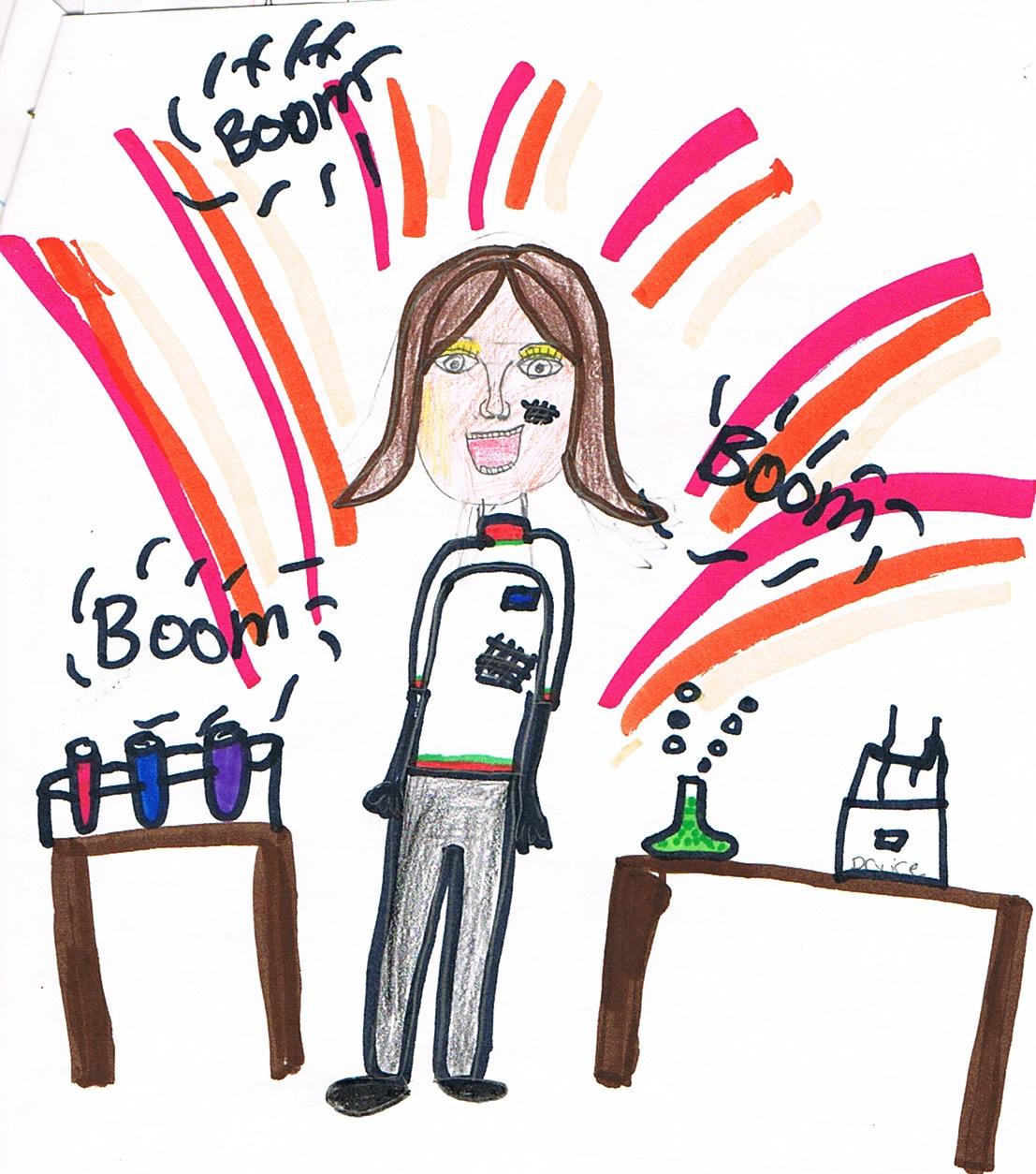
          ‘I’m a scientist’
     ThreeScience’ things you can do with
a cardboard box


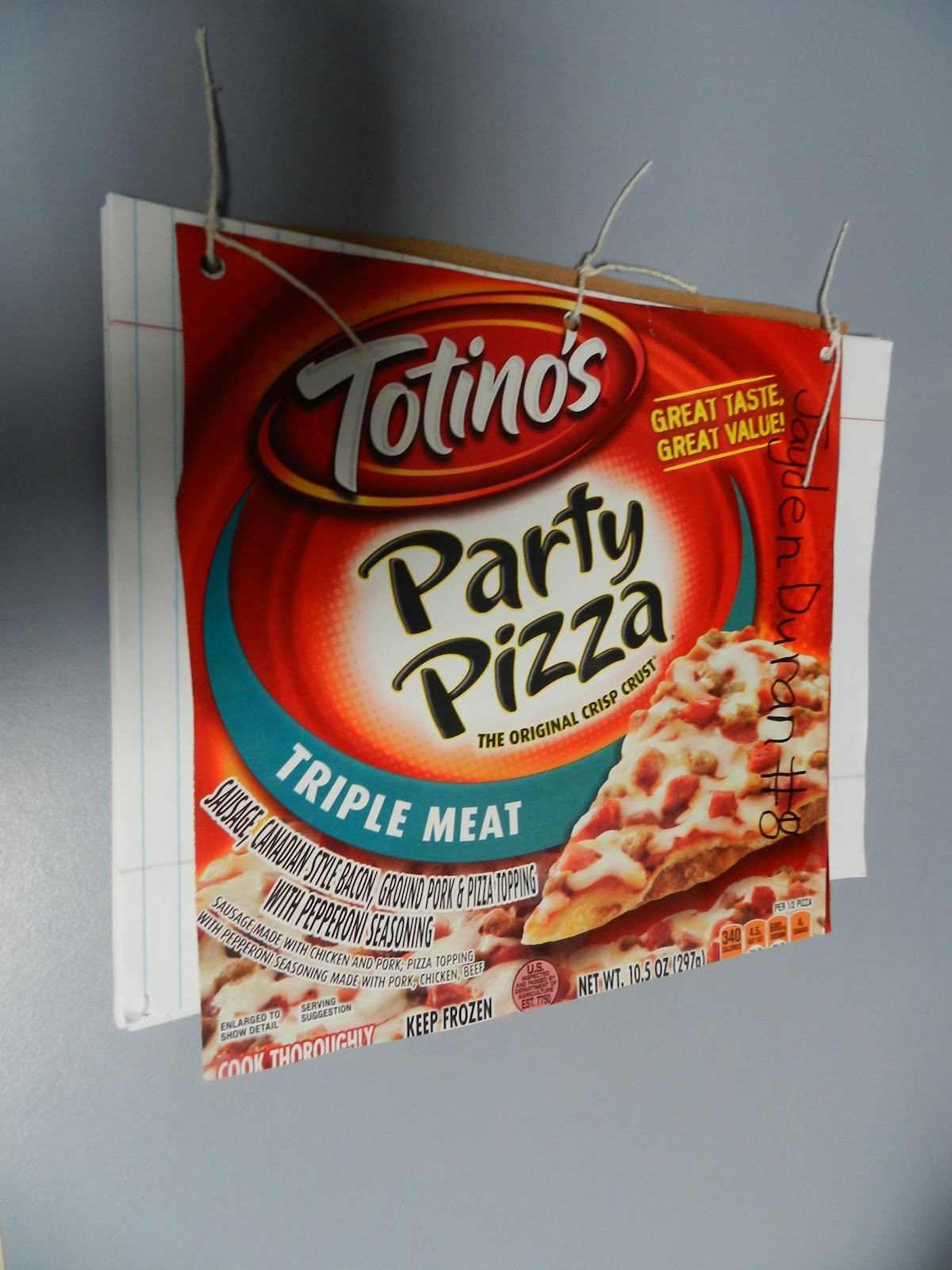
1. Make a science journal:

  • Cut the cover from a cardboard box
  • Punch a couple of holes in it
  • Punch holes in several sheets of paper - and place inside
  • Loop a long strand of wool or string through the holes, tie it, and, hey, you have your journal!  


Then, inside, write and draw your science experiments, science questions, and science thoughts.


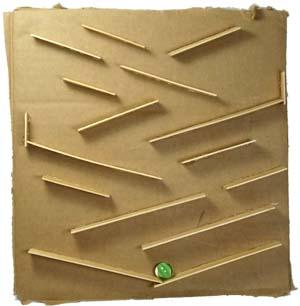
2. Make a marble run:

  • Cut your cardboard box in half, lengthways……………use the piece you cut away for your strips……….glue them in place, and, hey, you have a marble run.
  • Rest it on a couple of books (a ramp), and let it go!!
  • How high is your ramp?
  • What happens when you alter the height of the ramp?


3. Make a mini boomerang!

  • Cut out a 1” square from A small piece of card
  • Draw and cut out a small boomerang.
  • Write your initials on your boomerang.
  • Use another piece of card as your launching platform.
  • Balance the boomerang on the edge and flick it with your finger.
  • What happens when you flicked the boomerang?
  • Is there a pattern to the direction it rotates in? Does it spin to the right or left?
  • How far does it fly before it changes direction?


Yep, a cardboard box sure is a great science resource!!
And, I bet there  are more things you can do….

Talking with 7th graders


I had an enjoyable time at Elizabeth Middle School talking with 7th graders............taking over an hour, I seemed to catch their interest with two stories, 'When I became a scientist...', and, 'Penelope the Tarantula..'

It reminded me of my Thursday sessions with 7th graders in a nearby middle school when I was Site Professor in UCD's Teacher Education program.

I've been invited back to lead a science session. I shall look forward to that.

Catwalking

Catwalking....

Each morning for the past month or so, I've been out and about just as the sun is rising, leading Bertie and Fifi on a one and a half mile catwalk.

This morning we went out just as the sun was casting its incredible light on the beautiful landscape that surrounds my house.   B and F are great hiking company and know every detail on our trail, especially which yucca to hide behind if theres's someone out with a dog.

Here's Fifi.............

Bertie likes to have a drink first.......


Sometimes we see wild turkeys......
and sometimes we take a look to see who is inside the Skunk Hotel......


Well, back to blogging again.......

After what seems a million hours of following all that the New York Times has written about the presidential election, cutting out its articles and headlines and scrapbooking them, I've decided to return to blogging my teaching science thoughts - and anything else that catches my mind. I've had it with all the current politics.

I'll leave the last word in my Presidential Election scrapbook to David Brooks, my favorite NYT commentator/writer on current events, and his article in THE New York Times, January 27th. OpEd page. Take a look.